

Current Status and Data Analysis of HIV/AIDS in Hong Kong (Latest 2023 Situation)
According to the latest statistics from the Centre for Health Protection of the Hong Kong Department of Health, the HIV/AIDS epidemic in Hong Kong shows the following characteristics:
Source: Centre for Health Protection, Hong Kong Department of Health
I. New Infection Numbers and Trends
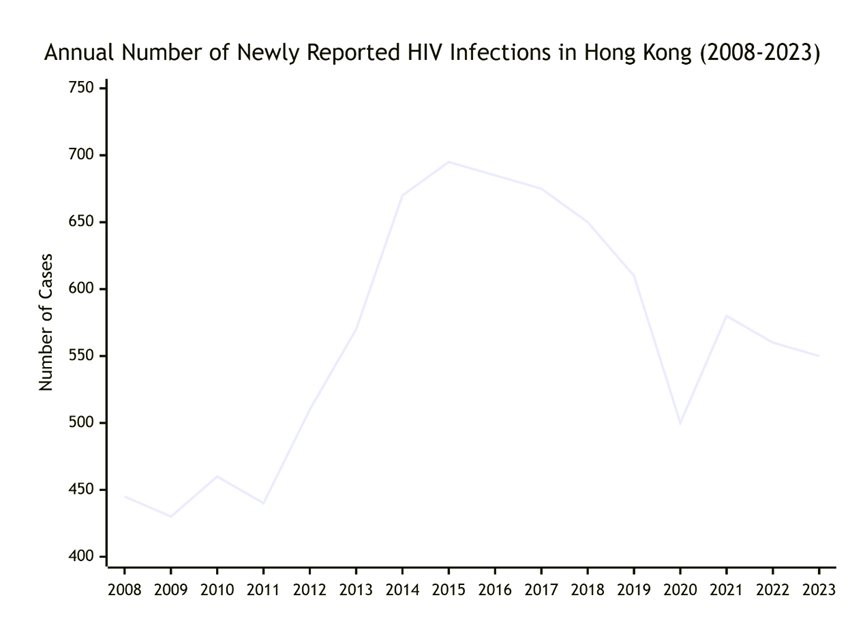
The chart below shows the number of newly reported HIV infection cases in Hong Kong each year since 2008. After a slow increase over the past decade, the overall figure has stabilised or shown slight fluctuations in recent years. This reflects that ongoing prevention and testing efforts have had a certain degree of effectiveness, but the epidemic is not yet under control.
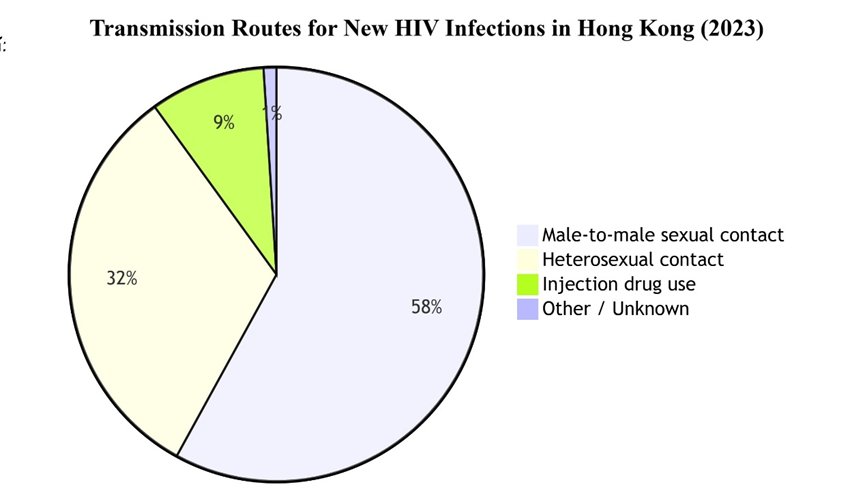
II. Distribution of Main Transmission Routes (2023 Data)
- Male homosexual/bisexual contact accounted for 58% (approximately 326 cases)
- Heterosexual contact accounted for 32% (approximately 180 cases)
- Injecting drug use accounted for <1%
- Other/Unknown accounted for approximately 10%
III. Gender and Age Analysis of Infected Individuals
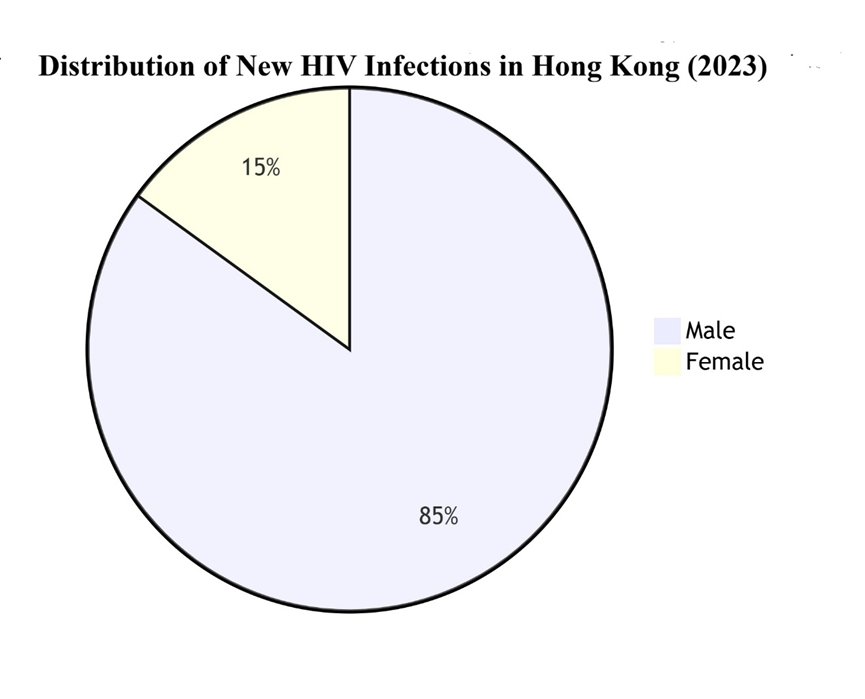
- Gender Distribution:New infection cases remain predominantly among males. In 2023, males constituted 85% (479 cases) of the total, while females accounted for 15% (84 cases). This disparity is directly related to men who have sex with men (MSM) being a key local high-risk group.
- Age Distribution:The age of infected individuals spans all groups, but sexually active young and middle-aged adults aged 20-49 form the primary affected demographic. Recent data indicates a noteworthy rising trend in the number of reported infections within the 50 years and above age group.
IV. Current Challenges and Responses in Hong Kong
- Interventions Targeting Key Populations: The epidemic remains concentrated among men who have sex with men (MSM). Our Society and partner organisations continuously engage this group through outreach, social media campaigns, promotion of PrEP, and encouragement of regular testing.
- Reducing Stigma and Discrimination: Societal stigmatisation of people living with HIV remains the most significant barrier to testing and early treatment. Public education is paramount.
- Promoting Early Testing and Treatment: A proportion of individuals are still diagnosed only after their immune systems have been severely compromised (i.e., at the AIDS stage). We are committed to promoting the benefits of “early testing, early treatment” and advocating the “U=U” concept to improve the quality of life for people living with HIV and break the chain of transmission.
- Addressing the Ageing Infected Population: With the widespread availability of effective treatment, many people living with HIV are surviving long-term, leading to increasing needs for chronic disease management and psychosocial support.
Conclusion: Hong Kong's HIV/AIDS epidemic has entered a "concentrated epidemic" stage and shows signs of stabilisation. The future focus of prevention and control lies in targeted prevention education for high-risk groups, maximising efforts to promote testing and treatment, and continuously combating stigma through education, ultimately striving towards the goal of "zero new infections, zero discrimination."